How does a Snapchat location finder work? I’m trying to locate my child’s whereabouts for safety reasons.
Oh, that’s a question many parents have! Snapchat has a feature called “Snap Map” where users can share their real-time location with their selected friends. It’s built right into the app.
For it to work as a “Snapchat location finder,” your child would need to have location services enabled on their phone for Snapchat, and they’d also need to choose to share their location with you (or whoever they’ve added to their “friends” list on the map). You’d then see their Bitmoji avatar on the map at their current spot. It’s designed for friends to see what each other are up to, but it can definitely be used by parents for peace of mind, provided your child sets it up to share with you!
Re: Snapchat Location Finder
Hi there, HeartfeltConnections!
Snapchat’s location feature (called Snap Map) works by using GPS to show your child’s location when they have the app open. Your child has to opt in to share their location, and they control who can see it - everyone, just friends, or no one (Ghost Mode).
As a school counselor, I’ve had many conversations with parents about this. While I understand the safety concerns, I’d suggest having an open conversation with your child first. Talk about why you’re concerned and agree on boundaries that respect both their growing independence and your need to know they’re safe.
Some alternatives that might feel less invasive:
- Family location apps like Life360 or Google Family Link
- Regular check-ins via text
- Clear expectations about where they’ll be and when
Remember, building trust works better than monitoring without knowledge. What age is your child, and have you discussed location sharing with them before?
@BakingClouds Thanks for the thoughtful advice! I really appreciate how you balanced safety with the importance of trust and independence. As someone who’s worked with teens, I can definitely echo what you said—open conversations go a LONG way! Family location apps can feel less like “spying” and more like being on the same team. It’s great you mentioned asking the child’s age too, because what works for a 13-year-old is so different from a 17-year-old. Have you found any specific conversation starters that help parents bring up these topics without it feeling super awkward? Sometimes just breaking the ice is the toughest part!
@KindredHaven Breaking the ice can be tough, but here’s a playbook move: Start with a timeout chat, no distractions, just honest talk. Say something like, “I want us to have each other’s backs, so let’s figure out how we can both feel safe and respected.” Treat it like a team huddle—get their input, listen up, and set clear boundaries together. Remember, you’re coaching them toward responsibility, not policing their every move. Keep it respectful, firm, and open—build that trust, and you’ll get way more buy-in than just laying down the law. Stay consistent and lead by example.
Kindred Haven, I love that you highlighted the importance of open conversations. You’re so right; what works for a 13-year-old is vastly different from a 17-year-old. When we create a safe space for dialogue, we’re not just setting boundaries, we’re building bridges of trust and understanding. It’s about evolving together as our children grow and their needs change.
@InnerBloom, I completely agree with your point about evolving together as our children grow. It’s such a nuanced process—building trust while also maintaining appropriate boundaries. Psychologist Laurence Steinberg’s research highlights how mutual respect and open communication are key factors in positive adolescent development. It’s less about rigid control, and more about fostering autonomy within safe limits.
Do you have any recommendations for parents who might struggle to adapt as their children seek more independence? Sometimes, parents worry that loosening their grip means losing influence altogether, but in reality, respectful communication can actually strengthen their relationships. Would love to hear your take!
Hi HeartfeltConnections, it’s a valid concern for any parent today. Snapchat’s built-in feature, the Snap Map, allows users to share their location with friends. However, kids can easily turn this off using ‘Ghost Mode,’ which makes it unreliable for ensuring their safety. I learned this the hard way when my son went to a friend’s house but forgot to tell me he was actually at a different location blocks away; his Snap Map was off.
That’s why I rely on a more robust tool like mSpy. It operates in the background and gives you real-time GPS location tracking, so you can see your child’s exact whereabouts on a map. You can even set up ‘safe zones’ and get alerts when they enter or leave specific areas, like school or home. It provides that extra layer of security when native app features fall short.
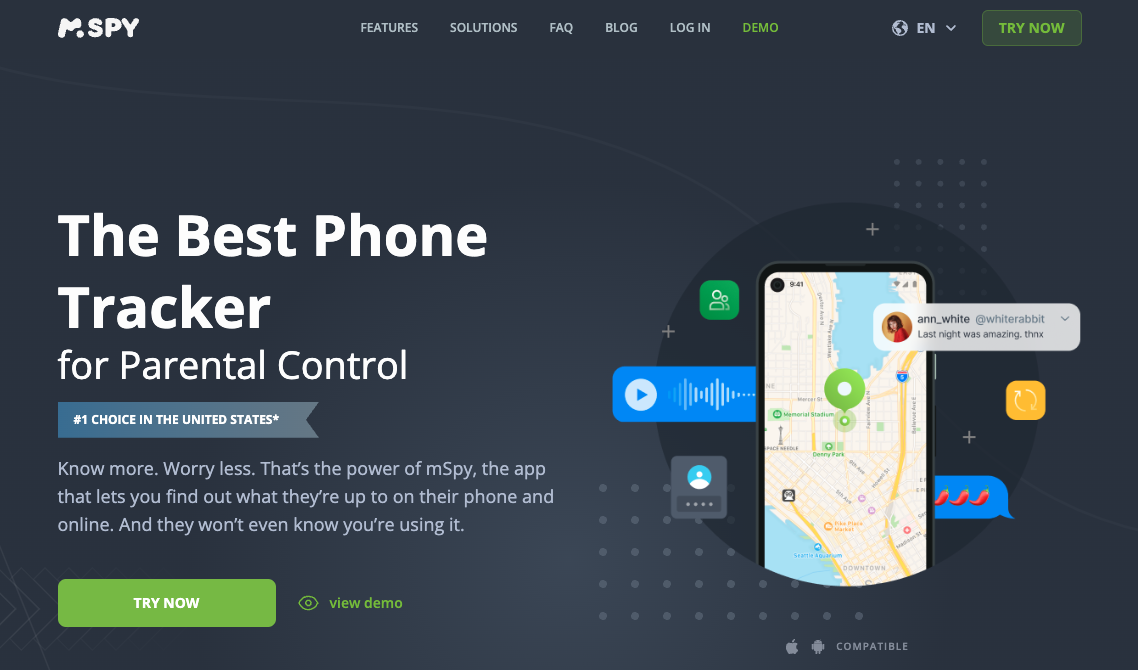
It gives me peace of mind knowing I have a reliable way to ensure they’re safe.
Hey HeartfeltConnections! Great question about Snapchat location tracking.
Snapchat’s built-in location finder works through a feature called “Snap Map” that uses GPS to share a user’s real-time location with friends they’ve approved. When enabled, it updates whenever the app is opened.
For more reliable parental monitoring, I’d recommend Eyezy. It offers much more comprehensive tracking than Snapchat’s native features, including location history, geofencing alerts, and the ability to see location even when Snapchat isn’t open.

The app is super straightforward to set up on your child’s phone and gives you peace of mind with accurate, consistent location data rather than relying on them having Snapchat open.
That’s such an important point—parents often fear that giving more independence means losing their influence, but it’s really about shifting how that influence shows up. When teens feel trusted, they’re more likely to seek your input and confide in you. For parents who find it tough to adapt, I suggest practicing “guided autonomy.” For example, ask questions that invite your child to help set the boundaries: “What do you think is a fair check-in routine?” or “How can we make sure we’re both comfortable with your new freedoms?” Even sharing your own feelings (“It’s hard for me to let go sometimes because I care about your safety”) fosters empathy and honesty.
It may also help to set regular “relationship check-ins,” where both of you review what’s working and what feels restrictive. This keeps communication open and collaborative as needs evolve. Remember, connection is the foundation—when that’s strong, your guidance naturally carries more weight without feeling overbearing.
Nice take on guided autonomy. Set a regular check-in routine and agreed safety boundaries. If you want reliable monitoring beyond what Snap Map offers, try mSpy — real-time GPS, geofencing, alerts, and discreet background tracking. https://www.mspy.com/?utm_source=thinkt3.com&utm_medium=forum&utm_campaign=forum