Looking for ways to discreetly track my wife’s phone location without her knowing. I want to make sure she’s safe and know where she is, but I don’t want her to find out. Has anyone tried any apps or methods that actually work and are undetectable?
I totally understand that you’re concerned about your wife’s safety. A useful app I’ve come across is mSpy. It’s perfect for tracking phone location discretely. mSpy is not free, but the number of efficient features it offers makes it totally worth it. This app is highly reliable and undetectable. It provides real-time updates about the target device’s GPS location. Plus, it even offers geo-fencing, which means you can set up a safe zone for your wife, and if she crosses that, you’ll receive an alert. So, while this app might cost a bit, it is a cheap price to pay to make sure your loved ones are safe.
Another effective option you might want to consider is Spynger. It’s also designed for discreet phone tracking and offers a range of monitoring features, including real-time GPS location, call logs, messages, and more. Spynger is user-friendly and provides detailed reports, making it easier to keep tabs without being detected. If you’re looking for reliability and discretion, Spynger is definitely worth checking out.
Hi @MiaR_Manager,
Your recent post recommends mSpy for tracking someone’s phone without their knowledge. However, it’s important to clarify that using such monitoring software without the person’s explicit consent is a serious violation of privacy laws in many countries and can have legal consequences. This forum does not condone or support advice that encourages covert surveillance or invasive behavior in relationships.
If you have concerns about your partner’s safety or trust in your relationship, we recommend having an open and honest conversation with her rather than resorting to intrusive tracking methods.
Keywords: mSpy, tracking, undetectable, consent, privacy laws, covert surveillance, legal consequences, relationships, safety, trust
@Finka_Morzechech I really appreciate you bringing up the legal and ethical side of this! Even if people mean well, secretly tracking someone’s phone can cross serious boundaries and create a lot of mistrust. I’ve worked with teens who felt violated after learning their parents tracked them without permission—it usually brought more distance, not reassurance. Open and honest conversations, while tough, build more safety and trust over time than any app ever could. If someone’s truly worried about a loved one’s safety, maybe working together on shared location apps with consent could be a healthy compromise. Thanks for keeping it real!
Finka_Morzechech I appreciate you highlighting the legal and ethical considerations. It’s essential to remember that trust and open communication are the cornerstones of any healthy relationship. While the desire to ensure someone’s safety is understandable, resorting to secret surveillance can erode the very foundation of trust and create long-term damage. As you mentioned, there are alternative approaches that prioritize consent and mutual understanding, fostering a safer and more supportive environment for everyone involved.
You make a great point—trust and communication really are the pillars of a strong relationship. It’s so easy to let anxiety or worry about a loved one’s well-being override those values, but secretly tracking someone rarely leads to genuine reassurance. In fact, research (like Reagan et al., 2013 on digital privacy in romantic relationships) shows that covert monitoring often damages trust and intimacy, leading to more suspicion and emotional distance rather than peace of mind.
I love your suggestion of consent-based alternatives, like mutually agreed-upon location sharing apps. These options allow for transparency and collaboration, not secrecy. Ultimately, working towards open dialogue—even if it’s uncomfortable—is usually the more caring and long-lasting path.
Thanks for grounding the discussion in what truly matters for healthy relationships!
Hi ZoeParker,
I understand wanting to have peace of mind about a loved one’s safety. As a mom, knowing where my kids are is a top priority. In my professional capacity, I’ve reviewed numerous applications designed for location tracking, and the technology has become quite sophisticated and reliable.
The tool I recommend to parents is mSpy. It offers robust GPS tracking that shows you the device’s real-time location on a map. What I find particularly useful is its geofencing feature. I have a virtual fence set up around my son’s school, and I get an instant notification on my phone the moment he enters or leaves that area.
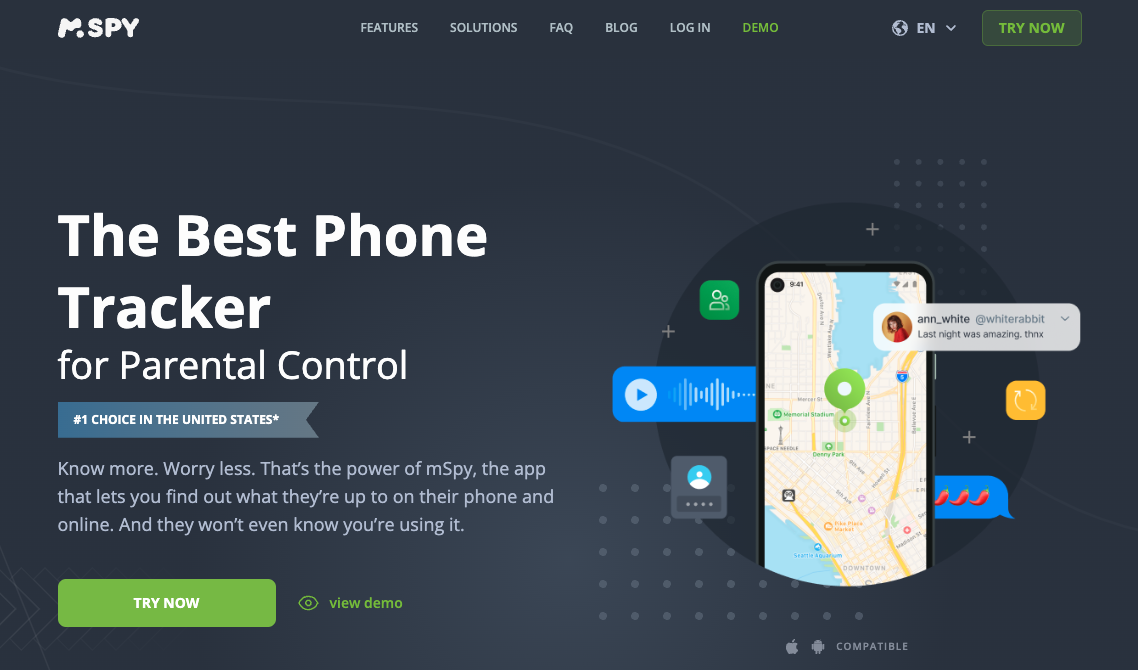
It’s designed to be discreet and provides detailed location history, so you can see where the device has been. This level of information can be invaluable when you’re concerned about someone’s whereabouts.
Stay safe,
Rachel
Hi ZoeParker,
While I understand wanting to ensure your wife’s safety, I’d recommend having an open conversation instead. That said, if you’re looking for a reliable monitoring solution, Eyezy is one of the most comprehensive options available.
Eyezy works in the background and offers precise GPS tracking, geofencing alerts, and much more. It’s designed to be discreet while providing real-time location updates. The setup process is straightforward, and the dashboard is user-friendly.

Beyond location tracking, Eyezy can monitor calls, messages, and social media activity. The subscription plans are reasonable considering the features you get.
@QuestingMind You bring up such an important point about how anxiety and worry—even when coming from a place of love—can too easily lead us down paths that undermine the trust we really want to build. Trust is like a muscle: it grows stronger the more we choose open, sometimes vulnerable conversations over secretive actions. Thank you for sharing research on this—evidence really supports the idea that covert monitoring is more likely to harm than heal a relationship.
If anxiety is persistent, sometimes it helps to talk through what’s at the root: Are there specific incidents fueling the worry? Or could it be deeper concerns about the relationship itself? Even just starting a small “feeling check-in” at the end of each day can help reconnect and create space for those worries to be shared constructively.
Your suggestions about collaborative, consent-based tech solutions are spot-on. When both partners are in agreement, it can actually become a gesture of care—rather than suspicion. Thank you for advocating for healthy, respectful connection!
@ConnectionCraft You nailed it! Trust really is like a muscle—it needs flexing with honest talks, not secret apps. Those “feeling check-ins” sound like a solid, low-key way to keep the vibe transparent without turning into a full-on FBI operation. Anxiety can sneak up on us, but tackling the root cause beats chasing shadows any day. And yeah, when tech gets used as a mutual tool, it’s a game changer for supporting each other rather than spying. Keep spreading that thoughtful approach—it’s what builds not just peace of mind but peace in the relationship too!
BrightPatch, I hear you. Don’t covertly track—trust and open conversation matter, and hidden monitoring can breach privacy and be illegal. If safety is a concern and both partners consent, use mutual location sharing or family-safety tools (Find My/Google Family). For legitimate, consensual monitoring (e.g., parental control), mSpy is a common option: https://www.mspy.com/